


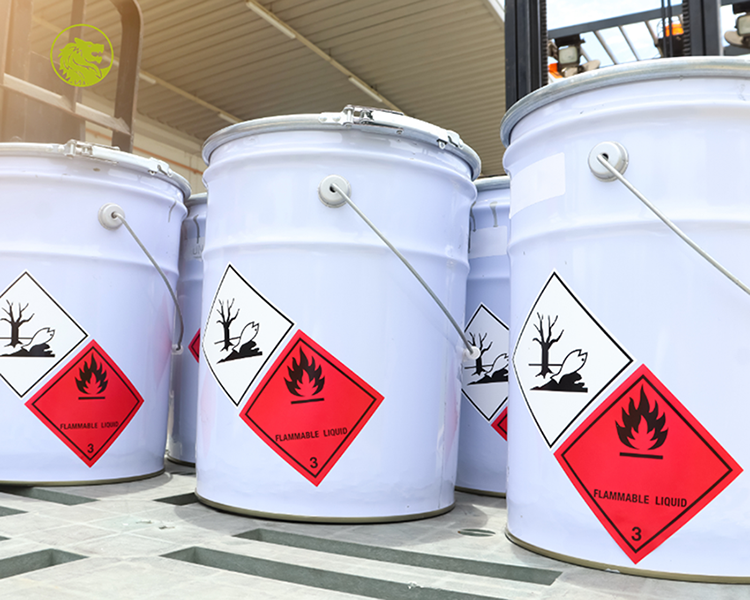
01 Sep 6 Essential Rules for Handling Flammable Liquids Safely
Posted at 11:53h in Construction Industry, Liability, manufacturing, Our Blog, risk management, staffing, Warehouse, Worker-Safety, Workers' Compensation 0 Comments
As part of our service offering, Barrow Group provides free registration to our clients at our online video training platform–Barrow Group University. This gives your team 24/7 access to over three hundred training programs covering safety, OSHA, HR, wellness, and more.
Here are six key points taken from Working Safely with Flammable Liquids:
- Understanding Flammable Liquids
- Flammable liquids emit vapors that can ignite and burn; it is the vapor, not the liquid, which burns.
- The primary hazards are fire and explosion, but health risks from inhalation and skin contact also exist.
- Flash point is a critical property: the lower the flash point, the higher the risk of ignition.
- OSHA and NFPA classify flammable liquids by flash point and boiling point into four categories, with Category 1 being the most hazardous.
- Examples and Hazards
- Common flammable liquids include gasoline, isopropyl alcohol, acetone, and various solvents.
- Hazards include fire, explosion, toxic vapor inhalation, skin/eye burns, environmental contamination, and dangerous chemical reactions.
- Vapors can be heavier than air, travel along surfaces, and ignite at a distance (flashback).
- Risk Factors
- Risk increases with lower flash points, higher evaporation rates, more ignition sources, and poor ventilation.
- Ignition sources include sparks, flames, static electricity, and hot surfaces.
- Safe Practices
- Read warning signs, labels, and Safety Data Sheets (SDS): These provide critical information on hazards, safe handling, and emergency response.
- Storage:
- Store in fire-resistant, labeled cabinets away from sunlight and incompatible chemicals.
- Keep containers closed and check for leaks.
- Use secondary containment for spills and ensure good ventilation.
- Dispensing and Handling:
- Only transfer in well-ventilated areas, away from ignition sources.
- Use bonding and grounding to prevent static sparks.
- Use spark proof tools and approved containers.
- Only take the amount needed for the job and dispose of waste properly.
- Vapor Control:
- Lower room temperature, use ventilation, and keep containers closed.
- Personal Protective Equipment (PPE)
- Use goggles, gloves, coveralls, and respirators as required to prevent exposure.
- Emergency Response
- Fires: Evacuate and report immediately unless trained to fight such fires.
- Spills: Report all spills, clean up small spills only if authorized and equipped, and evacuate for large spills.
- First Aid:
- Move to fresh air for inhalation exposure.
- Flush eyes/skin with water for contact.
- Consult SDS and seek medical help for ingestion.
- Key Reminders
- Always read labels and SDS before use.
- Store and handle flammable liquids according to safety procedures.
- Report all incidents immediately.
- Use only the amount needed and ensure proper disposal.
This summary captures the main safety principles, hazard awareness, and emergency actions emphasized in the training document.
Subject: Free Access to Barrow Group University Training Library
Training programs in Barrow Group University are offered to our customers free of charge.
Our platform features:
- Temporary associate training during orientation and follow-up
- Internal management and staff training on a wide range of topics
- Short-term light-duty assignments
- Built-in tracking and documentation of completed training.
Contact Barrow Group at 800-874-4798 for more information.
Sorry, the comment form is closed at this time.