


02 Jun How to Read an Explanation of Benefits
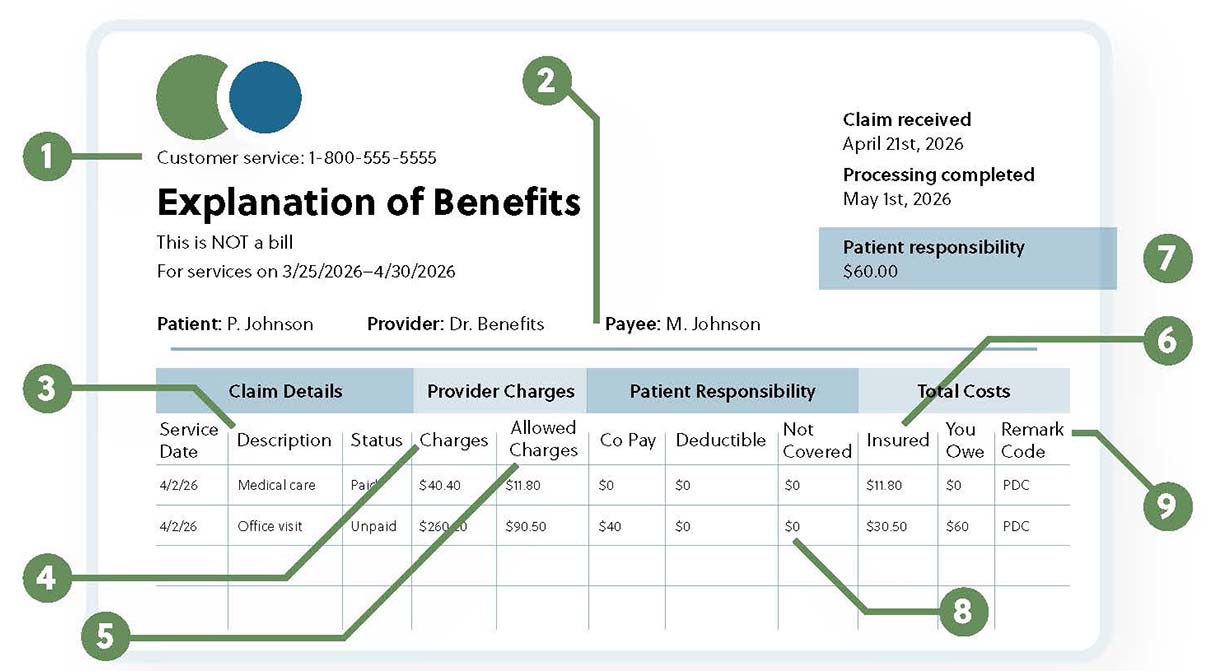
An explanation of benefits (EOB) is a helpful breakdown of how your health insurance handled a recent claim. While it may look like a bill, it’s simply a summary, not a request for payment. Learning how to read your EOB is one of the easiest ways to stay informed about your health care costs.
To read your EOB, check each section to confirm charges, verify coverage and review for errors such as duplicate charges or services you didn’t receive. Reviewing each EOB helps prevent unexpected charges when claims are processed and ensures you don’t pay more than you should.

1. Contact information—Use this phone number to contact a customer service representative if you need help finding a provider or have questions about coverage.
2. Payee—This is the person who will receive any reimbursement for overpaying the claim.
3. Service description—This shows the services that were provided, such as a medical visit, lab test or screening.
4. Provider charges—This is the amount your doctor and facility bill.
5. Allowed charges—This is the discounted rate your plan has negotiated.
6. Paid by insurer—This is the amount the insurer covered.
7. Patient balance—This is the amount you owe, including any copay, coinsurance or deductible.
8. Noncovered service—This is a service, item or supply your plan doesn’t include.
9. Remark code—This is a note from the health plan that provides more details about the costs, charges and paid amounts for the visit.
Some EOBs also include out-of-pocket expenses that count toward your deductible and out-of-pocket maximum.
Important: Review each EOB as soon as it arrives and compare it with your provider’s bill. If something doesn’t look right, reach out to your insurance company or the provider’s billing office.
Sorry, the comment form is closed at this time.