


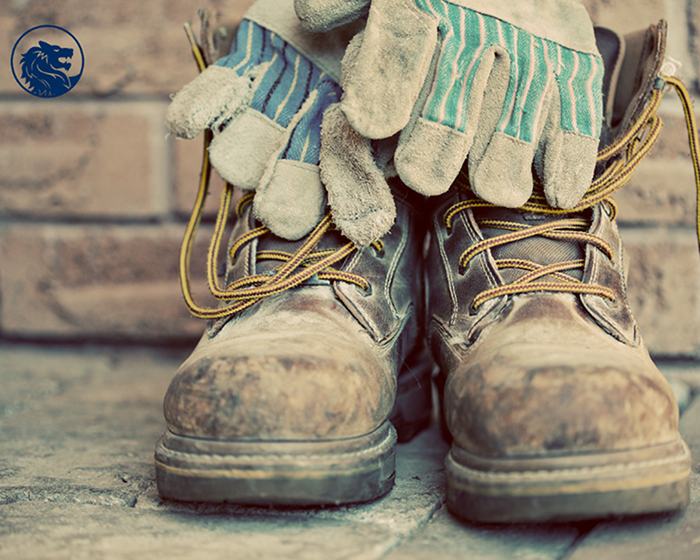
13 Jul Protecting Your Feet at Work
If you face falling-object hazards in the workplace, such as when working below areas from which tools or materials could fall or when handling heavy materials, protect your toes by wearing shoes with impact-resistant safety toes.
Impact Resistant Safety Toes
Steel Toe Shoes: One common choice for safety-toe footwear is steel-toe shoes. Though steel toe shoes are heavy and conduct heat, cold, and electricity, they provide the best protection against impact, crush, and shearing injuries. They are also less expensive than other types of safety-toe footwear.
Alloy Toe Footwear: You can also wear alloy-toe footwear. Alloy toes are made from a mixture of aluminum and titanium and are up to 50 percent lighter than steel-toe boots. Because these materials are much thinner than steel, these boots can be more comfortable. However, alloy safety boots will still conduct electricity and are generally less protective against impacts than steel-toe boots. They are also more expensive.
Composite Toe Footwear: Finally, you may choose to wear composite-toe footwear. Composite-toe boots use materials like Kevlar®, plastic, and carbon fiber and should be used when your feet are exposed to electrical hazards because they are nonconductive. These boots are not as strong as steel- or alloy-toe boots, so they must be thicker to achieve the same safety ratings, and the composite material can weaken over time. They are also less protective against falling objects than steel- or alloy-toe footwear, and it can be difficult to tell if the toe cap has been damaged. However, toe boots are lighter than steel-toe boots, and they insulate better against hot and cold temperatures.
All safety-toe footwear must meet the minimum compression and impact performance requirements in ASTM International standards F 2412 “Test Methods for Foot Protection” and F 2413 “Specification for Performance Requirements for Protective Footwear” or provide equivalent protection.
If you are not normally faced with the hazard of falling objects, you do not need to wear shoes with toe protection. However, if occasionally your job includes tasks that expose you to falling hazards, you may want to put on a strap-on toe guard. Toe guards fit over regular shoes to protect the toes from impact and compression hazards. They may be made of steel, aluminum, or plastic.
Metatarsal Protection
The metatarsals, which are five long, slim bones located on the upper part of the top of your foot that run from the base of your toes to the ankle, may need additional protection from both falling and rolling objects. Toe protection devices, such as steel toes, do not protect your metatarsal. Boots are available with external metatarsal protection. Alternatively, you can choose to wear metatarsal guards that strap to the outside of regular work boots. These guards can be made of aluminum alloy, fiberglass, galvanized steel, or high-density plastic.
Ankle Protection
Rolling Objects: If you are exposed to rolling objects on the job, such as tools, barrels, or machinery, select footwear that has good ankle protection. Ankle protection is needed when working with material-handling aids such as carts, pallet jacks, dollies, or any other item on wheels that could bang into an ankle or catch your heel and cause an injury. Some footwear will have a steel shank in the heel to protect the heel and the Achilles tendon from rolling objects. Footwear may also have steel shanks going up the sides of the ankles to prevent the ankles from being twisted or otherwise damaged by rolling objects.
You should also wear safety-toe footwear when working around rolling objects to prevent your toes from being crushed. Alternatively, you can select shoes with metatarsal protection or use a strap-on metatarsal guard to protect your entire foot from crush injuries.
Puncture Resistant Shoes
To prevent puncture wounds from sharp objects such as metal chips, nails, wire, tacks, scrap metal, or screws, choose puncture-resistant shoes. Puncture-resistant soles are made of hard and dense materials. Some reinforced soles can be made of metal, but you should only wear these if you are not at risk for electrical contact. Some work boots may also have steel shanks in the soles that prevent sharp objects from penetrating to the foot.
Slip Resistant Footwear
Proper footwear can play a large role in preventing slip-related injuries. Remember, street shoes or athletic shoes are not intended to provide slip resistance in the work environment. For example, shoes that provide good traction on a basketball court may not provide good traction in a work environment that is subject to slip hazards from water, oil, or chemicals. Slip-resistant shoes will have soft rubber soles that grip the surface of the floor. However, the soles will not be too soft so that they would wear down quickly. The soles of slip-resistant shoes have treads with channels that carry the water, oil, chemical, or other contaminant out from under the shoe, which will allow the ridges on the sole to come into firm contact with the floor.
Remember that wearing slip-resistant shoes does not eliminate the possibility of slipping. You must still recognize slip-related hazards and walk carefully in areas that have wet floors.
Non-Conductive Footwear
If your job requires you to work around live electrical components and conductors, wear nonconductive shoes. Footwear that is labeled nonconductive is designed to reduce the potential for electrical shock. This footwear may also be labeled “Electrical Hazard,” or EH, boots or shoes, which are designed to significantly reduce the flow of electricity that goes through the shoes and ground and minimize the possibility of getting electrocuted. EH footwear will always have an “EH” on the ASTM label, which is sewn into the inside of the boots. Keep in mind that nonconductive and EH footwear is not meant to be the main source of protection in an electrically hazardous environment and are designed to be used as a secondary source of protection. Soft-toe shoes and boots cannot be used as EH-rated footwear.
The Importance of Footwear that Fits Properly
Just like your everyday footwear, when selecting work shoes, it is important that they fit properly and are comfortable, especially if you are going to spend 8 to 12 hours a day in them. Make sure boots fit snugly around the heel and ankle when laced up. They shouldn’t slip or pinch the foot or toes. Try on work shoes after your work shift when your feet are likely to be swollen to their maximum size. Shoes that do not fit properly could contribute to musculoskeletal disorders such as plantar fasciitis and heel pain from heavy heel impact and chronic stress in the heel area. Improper fit can also contribute to ankle, knee, and lower back pain because it can cause excessive strain on the weight-bearing skeletal system. All sorts of insoles are available on the market today. However, soft, cushion, and gel insoles only provide short-term relief. Because they are soft, these products cannot stabilize the foot and collapse as the foot and ankle go through their normal range of motion. They do not provide the needed support. Prefabricated over-the-counter orthotics can be purchased for a reasonable price. They support and control the normal collapse of the foot. They can provide the arch support that is needed but might be missing in many types of foot protection.
Remember to always fasten your work shoes securely, and make sure the laces don’t drag on the floor, as this could cause a trip hazard.
Footwear Care
Once you choose the right work boots or shoes for your job, always wear and care for them properly to maximize the protection they give you. Keep your footwear, particularly treads on the soles, clean. Remove dirt, mud, and hazardous materials after each use to help keep the footwear in good condition. Brush off excessive dust and debris. Spray mud off your work shoes with water. Decontaminate chemical-resistant shoes and any footwear that contacts hazardous substances after each use.
Storing Shoes: Before storing your work shoes, be sure they are clean and dry. Do not leave it overnight while still contaminated with oils, chemicals, or other work debris. Store work boots in a location that protects them from dirt and undue exposure to liquid chemicals or chemical vapors. Store them so they can maintain their natural shape to prevent unnecessary damage. Do not just toss them into the bottom of your locker.
Inspecting Footwear: Inspect your foot protection before each use for signs of damage or wear that could inhibit the protection the work shoe is supposed to provide. Check toe and metatarsal protection, as well as other steel shanks, to make sure they are in good condition. Check chemical-resistant and waterproof footwear for holes, tears, or cracks. Check soles, especially those intended to protect against slips or punctures, daily for excessive wear. Repair or replace damaged or defective footwear.
Key Points to Remember
We’ve learned a lot about foot hazards and how foot protection can protect against them if it is worn and cared for properly. But before we end, let’s review some of the key points we’ve covered during this session. You are required to wear foot protection when there is a danger of foot injuries due to falling objects, rolling objects, or objects piercing the sole of your foot or when the use of protective footwear will protect you from an electrical hazard.
Other conditions that present foot hazards include slippery walking surfaces, chemical exposure, wet conditions, hot work, and hot or cold conditions. Ensure you are wearing the appropriate footwear for your work tasks by checking that your employer has assessed all of the hazards present and then implemented appropriate engineering controls and work practices and selected the proper safety footwear. Safety footwear manufacturers provide tags and labels that inform you of the footwear’s intended purpose. Never assume that a shoe will also protect against a hazard that is not specifically identified on a tag. Inspect your foot protection before each use and clean it after each use. Allow your footwear to dry before storing it.
Sorry, the comment form is closed at this time.