


29 Jun The Pros and Cons of Annual Standardized Wage Increases
Posted at 11:01h in Business, employee benefits, human resources, Our Blog, PEO, staffing, Uncategorized, United States Economy 0 Comments
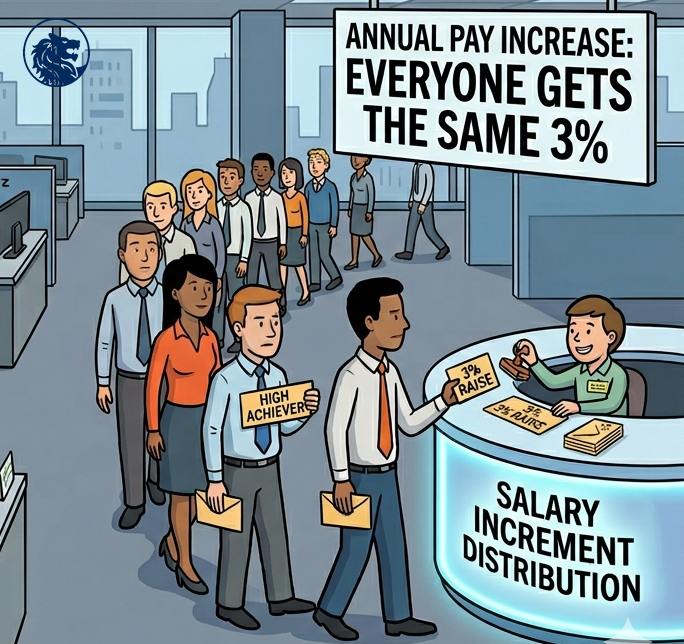
An annual standardized wage increase is a uniform percentage or flat-dollar raise given to employees, often regardless of individual performance. These increases typically range from 2% to 4%, though this varies by industry, company size and economic climate. More employers are taking this “peanut butter” approach for raises in 2026, providing workers with across-the-board salary increases. According to Payscale:
- More than 4 in 10 organizations are either using or actively considering standardized pay increases in 2026.
- Most employers plan to give average raises of 3.5% in 2026, similar to raises in 2025.
Weighing the Tradeoffs
Standardized raises offer real operational advantages, but they’re not without risk. Employers should consider both the advantages and drawbacks of “peanut butter raises” before making the compensation decision.
| The Pros | The Cons |
|---|---|
| Predictability--A reliable year-over-year increase can help employees plan their personal finances and make budgeting easier for employers | Limited reward for high performers--top talent may feel their contributions are undervalued when their raises match those of peers contributing at a lower level. |
| Simplicity and percived fairness--This approach minimizes the perceived biases that merit increases could cause. | Potential for wage stagnation—In low-increase years (e.g., 2%), real wages can decline if inflation is higher than the standardized raise. |
| Administrative ease—HR teams spend less time managing calibrations and balancing differences, and managers have fewer complex pay conversa-tions. | Reduced flexibility—Standard increases don’t account for departmental or job-specific needs (e.g., certifications and compliance requirements). |
| Employee morale—Standardized raises are a meaningful indicator that work is acknowledged and appreciated, especially for workers not eligible for merit increases or bonuses. | Risk of pay compression—Over time, standard-ized increases can create or worsen pay compression, with long-tenured employees earning nearly the same as new hires. |
| Strong employee retention—Standard raises can provide continuity during years when promotions are limited or business results are uneven. | Doesn’t address skill gaps or talent needs—Standard increases alone can’t solve issues like skill shortages, retention risks or succession gaps. |
Sorry, the comment form is closed at this time.